
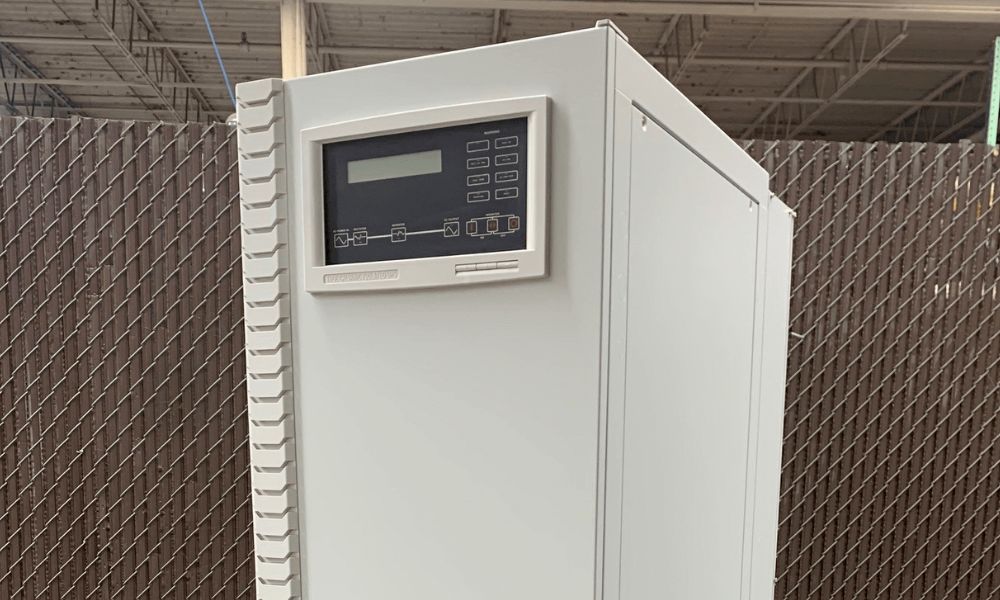
Solid state frequency converters provide precise electrical frequency matching, seamless voltage regulation, and maximum power efficiency for sensitive industrial machinery. By converting incoming utility power typically 50 Hz or 60 Hz into tailored output frequencies without relying on moving mechanical parts, these advanced systems eliminate grid power mismatch issues instantly. Industrial operations across manufacturing, aerospace, marine, and testing laboratories depend on solid state design to safeguard expensive capital equipment, reduce energy consumption, and guarantee continuous operational uptime.
1. Superior Energy Conversion Efficiency
Solid state architecture utilizes semiconductor electronics like insulated-gate bipolar transistors to manipulate voltage and frequency electronically. Legacy rotary motor-generator sets suffer from constant mechanical friction, heat loss, and rotational inertia that drain electrical efficiency. Semiconductor conversion achieves energy efficiency ratings exceeding ninety-five percent, directly lowering plant energy costs.
Lower energy losses also mean reduced heat dissipation within the plant environment. HVAC units work less to keep equipment enclosures cool, creating a compound savings effect across facility operations. Converting utility power electronically ensures that every kilowatt pulled from the grid delivers useful work to downstream industrial systems.
2. Near-Zero Maintenance Requirements
Eliminating moving mechanical parts transforms equipment reliability and maintenance schedules. Older rotary converters rely on high-speed bearings, brushes, drive belts, and slip rings that require frequent lubrication, alignment checks, and component replacements. Solid state systems operate silently without friction, mechanical wear, or structural vibration.
Unplanned downtime drops dramatically when plants swap mechanical conversion for electronic power processing. Routine care shifts from teardowns and bearing changes to simple fan air filter cleaning and visual inspections. Maintenance teams redirect valuable working hours toward revenue-generating plant projects instead of firefighting power system breakdowns.
3. Precise Voltage and Frequency Regulation
Sensitive industrial robotics, CNC automated tooling, and high-frequency induction furnaces demand steady power quality to function accurately. Solid state technology maintains precise output frequency control within fractional percentage points, regardless of incoming line voltage swings or load changes. This precision guarantees consistent output quality across complex production cycles.
Voltage regulation happens almost instantaneously within digital control loops. When heavy machinery starts up elsewhere on the facility floor and causes line sags, the converter adjusts in milliseconds to keep downstream processes stable. Consistent voltage prevents calibration drift in sensitive instruments and keeps production quality uniform.
4. Compact Footprint and Flexible Floor Placement
Industrial real estate inside manufacturing plants carries high overhead costs, making space optimization essential. Traditional rotary sets demand heavy concrete foundation pads to handle vibration, alongside wide clearance radiuses for ventilation and mechanical servicing access. Solid state converters package their power components into compact, self-contained steel enclosures.
Facilities can install modular converter cabinets directly alongside the machinery they power, mounted against interior walls, or integrated into existing electrical closets. Lightweight modular design simplifies transportation into tight facilities without specialized crane rigging, speeding up installation timelines and cutting floor deployment expenses.
5. Clean Sinusoidal Waveforms and Low Harmonic Distortion
Unfiltered electrical noise creates harmonic distortion that overheats transformers, trips circuit breakers, and interferes with plant telecommunications. Visicomm Industries solid state frequency converters feature integrated pulse-width modulation pulse shaping and active power factor correction filters. These systems output smooth, clean sine waves that mimic or exceed local utility power quality.
Clean power shields neighboring equipment from disruptive line feedback and electromagnetic interference. Motors run cooler, circuit boards avoid random system crashes, and sensitive analytical sensors read data without signal noise artifacts. High power factor performance also protects facilities from utility power factor penalty charges on monthly energy bills.
6. Instantaneous Transient Response and Load Matching
Dynamic industrial processes experience sudden step loads when heavy machinery cycles on or off instantly. Rotary sets struggle under sudden load changes, suffering from speed droop and voltage drops while their mechanical momentum recovers. Solid state conversion monitors load variations continuously and adjusts current delivery instantly.
Fast response rates prevent operational stalls, motor stuttering, and automated line resets during heavy work cycles. Marine shore power hookups and aircraft testing rigs benefit tremendously, as onboard electrical systems demand flawless voltage stability during engine starts and power transfer routines.
Conclusion
Solid state frequency converters provide a modern power solution that upgrades energy efficiency, protects capital assets, and eliminates mechanical maintenance headaches. By delivering precise voltage regulation, clean sinusoidal output waves, and rapid transient response times, these electronic conversion systems ensure smooth operation across demanding industrial settings. Upgrading from legacy rotary equipment to solid state technology cuts utility costs, optimizes facility floor space, and strengthens long-term productivity across every manufacturing line.